Sunday, April 3, 2022

Shenandoah Valley and Rockfish gap

I have been looking at Pennsylvania a great deal recently.  I believe that I had Quaker families, Scotch-Irish, and German who came into the Delaware River area in the late 1600s to the mid 1700s.  Not many of my ancestors stayed in that area for more than a generation or two.  And almost all of them came down the Great Wagon road towards the south.  There were Indian problems in the west of Pennsylvania on the western side of the Susquehanna River.  The land had become expensive in Pennsylvania.  The land further south was much cheaper.  Many of my ancestors first moved to the western frontier of Pennsylvania living in Lancaster, York, and Cumberland before they decided to make the trek south.


You can see on the below map why they chose the Great Wagon road.  The Shenandoah Valley through which the road traveled lies between the Blue Ridge Mountains on the east (the sliver of dark green going from Harper's Ferry down through Washington, Perryville and the Appalachian Mountains on the west.  You can see that the Applachian mountains were quite formidable


The area around Staunton and Fishersville and Waynesboro was a thoroughly Scotch-Irish area.  James Patton established the Beverley Manor while Borden established Borden's Grant just south of Beverley Manor.  John Lewis and James Patton were responsible for the 10,500 acres on Calf Pasture River in Augusta County.  And John Caldwell led a group to Albemarle County in 1736.  And this last settlement is what led me to this post today.  I was thinking about a few of my family lines and the fact that they ended up in the area just east of the Blue Ridge mountains near Waynesboro.  I became aware of Rock Fish Gap.  It is called a Wind Gap because it was formed by erosion by a river or creek that no longer flows in the area.  But it is indeed an inducement to move east to settle.

My interest in this area was first inspired by my h2Morrison family.  Although Ronald feels sure that Patrick Morrison came west from having served his time as an indentured servant in the area around Richmond, Virginia, I have not been able to let loose of the idea that the Cabell County group who belong to this family line have folklore that our Morrisons were Scotch-Irish.  And that I need to explore the possibility that that is true and that they traveled first to the area around Philly ....spent a bit of time near Lancaster....then traveled down the great wagon road to cross through the Rockfish Gap into Albemarle/Amherst.  Amherst was formed out of Albemarle in 1761.  So we find Patrick receiving land in Albemarle in 1751.  It was 228 acres.  He is shown with the same land in Amherst County in 1767 probably in preparation for selling soon after to move to the area we find him during the Revolutionary War in Pittsylvania County, Virginia.  The witness in the sale in Amherst was the same man who sold him 50 acres in Pittsylvania County.  His name was Elias Smith.  It is possible that he was Patrick's father-in-law.  He appeared as a next door neighbor to Patrick in Pittsylvania County.  This last is information from Ronald.  It is not my own research.


Again, according to Ronald, Patrick lived on Piney River in Albemarle/Amherst County.  Your can see the arrow pointing.  And you can see how close Patrick would have been to the Irish tract/Borden's and Calf Pasture River.  Of course, you would have had to travel to one of the gaps on either side of Patrick.

Look on my slideshow for the image of the survey of Patrick's land on Piney River.  It is the slideshow labelled Morrison Family before Pittsylvania County.
 

Orange County, NC

 I know for sure that my Moore family and my Lakey family are found in Orange County, NC by 1764.  I think it likely that there could be other families.  Many years ago when I was trying to find parents for Sarah McKinsey I looked at the possibility that Edward Thomas who lived in Orange County, NC might have been her father.  This proved to not be the case.  But I made a trip to Hillsboro at the time and did a bit of research.  While there I copied pages from Orange County--1752-1952 Edited by Hugh Lefler and Paul Wager.  And actually the stamp on the title page says that I looked at it at the Rowan Public Library in Salisbury.  I am rereading chapter III by Ruth blackwelder who had been affiliated with UNC at one time.  The chapter is labelled Settlement in Early History.

The first paragraphs tell about the fact that in 1740 there was almost no settlers in the area but by 1767 Orange County had the largest population of any county in NC.  She mentions the Eno Community about seven miles north of Hillsboro which she says was the most distinctly Scotch-Irish settlement in the county.  And that Scotch-Irish also lived east of the Haw River.

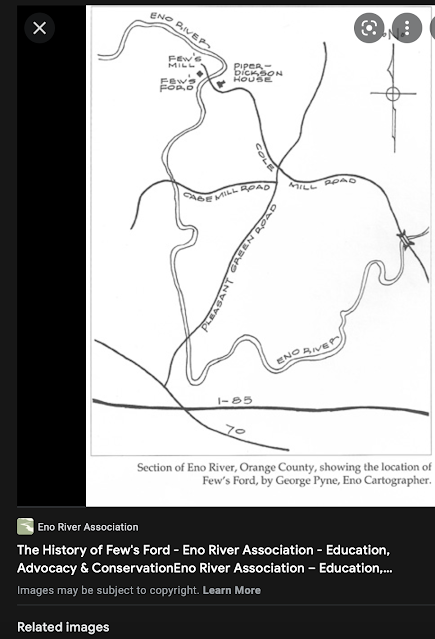
So next I look for a map of the waterways of Orange county.  However, I am distracted by information about William Few.  William Few moved to NC from Maryland.  He first settled at Few's Mill area and ran a mill there.  Later he moved to Hillsboro to run a tavern from his home that was on the Old Trading Path. Hillsboro had several names before receiving name it now holds in 1777.


https://www.enoriver.org/store/journals/fews-ford/


Ms. Blackwelder explains that while the Scotch-Irissh were thick in the Eno and east of the Haw, The germans settled west of the Haw.  There were so many Germans in western Orange that an English traveler in 1773 said he had trouble finding anyone who spoke English.

Do not forget that in 1764 Orange County was quite large:


And that if you had moved into NC in that time period and ended up in Randolph, Guilford, or Rockingham, You would first be recorded in either Rowan or Orange.  The boundary of that time period went right down the middle of those counties.

Hillsboro, which is the County Seat, sits where the old Trading path crossed the Eno River. 

Chapter IV is called Orange County and the War of the Regulation by nHugh T. Lefler.  I am not reading it today.  It is filed in North Carolina in Revolution/Regulation


Friday, March 25, 2022

Day book of the 6th Virginia Regiment in the Revolutionary War

Pat Roberts told our group of h2Morrison researchers that she had a copy in her files and piles of the Day book of the 6th Virginia Regiment in the Revolutionary War.  I believe she explained to us that she had made her copy at the Denver Library.  

All of our group seems to have descended from Patrick Morrison who was living in Pittsylvania County, Virginia during the Revolution.  Pittsylvania County was a hot bed of Patriotism for freedom from Great Britain.  And Patrick had at least four sons.  The three older sons joined the 6th Virginia Regiment and went off to war.  The youngest son was too young to go with them.  William, James, and John remained fought in every battle in the northern part of the Revolution....well perhaps not every battle....they were discharged at the end of their two year enlistment under Captain Peter Dunn at Valley Forge, Pennsylvania on 16 March 1778.  Unfortunately my knowledge of the battles is not good enough to make blanket statements without doing a bit of research.  It is son David who was too young too accompany his older brothers.

I am getting ready to go to the DAR library the first week in May for a conference hosted by the DAR.  One of my goals for the three day conference is to see and get copies of the Sixth Virginia Regiment Day Book 1776, 1777, 1778.  I have been told that the DAR holds the original book.  

Ronald found on line this weekend a book that is in the Brock Collection at the Huntington Library.  If you would like to see this digital copy of this book, it is available at:

https://hdl.huntington.org/digital/collection/p15150coll7/id/29070


Ronald and I agree that this is almost certainly not the book that I am hoping to see in DC. Ronald has taken the time to read through the book at the Huntington library and says that there is nothing in this day book that specifically refers to our ancestors.  Thus I am not taking the time to read the book at this time.

Sunday, March 20, 2022

DNA match to me on chromosome #1

I do not usually blog dna matches because of the privacy concerns.  However, last week I had such craziness that I want to document my matches.  I will not give kit numbers nor name names.  But I will offer clues that help me to remember what I was looking at. 

It started with an e-mail from gedmatch.  I get e-mails a lot and I almost always delete them from FTDNA, MyHeritage, GEDMATCH, Ancestry....telling me that I have a new match.  But when I click on them the person has no tree or for all sorts of reasons is not of interest.  But I wasn't very busy that morning and I thought,....what the heck....I'll take a quick look.  I read the directions and was able to find the new match.  I have written the kit number in my Beurhing autosomal folder. 

It was a very small match.  Less than 10cm on Chromosome #1.  It did not match mom...so it must be on Dad's side.


When I checked dna painter I had already identified the segment as having come to me from my 2-gr-grandfather Frederick Konig Dannenburg Beuhring,  It did not come from his wife as the match that I used to paint this segment comes from Fred's second wife while I descend from his first wife.  But much to my surprise, when I used the triangulation tool on gedmatch, I had 43 matches on the segment all over the world!  

And even more fun, I had one match with an woman in her 80s who lives in St Petersburg, Russia.  This is where our family folklore says that Frederick Konig Dannenberg Beurhing's mother's family were living before the move to New York before 1796.

Botetourt County, Virginia

 I am cleaning out my inbox this morning.  This includes reading e-mails that I have saved so that I can delete them.  My entire focus this weekend has been to file "stuff" where I can actually access the "stuff". The Virginia Genealogical Society sent me a newsletter this month that is of interest.  It is a website that has maps for the tax districts in Botetourt County from 1770 to 1780.

Here is what Botetourt county looked like in 1770


By 1780 Greenbrier County and Montgomery County had been carved out:


The information in the First Quarter Newsletter for the Virginia Genealogical Society has an article written by Jim Jackson and Bill McAllister 

Taxation in Colonial Virginia

For taxation purposes, the county courts in colonial Virginia subdivided their territory into discrete units— tithable districts. The courts appointed county magistrates—list owners—to generate lists of all potential taxpayers residing within each district. The list owners were required to submit their completed tax lists to the court by 10 June each year. Rather than affecting only land and property owners, this tax was imposed upon all individuals of a certain age who lived within a specified area, and therein lies the usefulness of these lists.

Here is the URL for the new website:

https://frontiervirginia.com

Later in the newsletter VGS added the definition of a tithable which is very helpful for research purposes:

Definition of a Tithable

In 1748, the Virginia legislature consolidated its previous laws defining tithables with an amended definition: “That all male persons of the age of sixteen years and upwards, and all negroe, mulatto, and Indian women of the same age, except Indians tributary to this government, and all wives of free negroes, mulattos, and Indians, except as before excepted, shall be and are hereby declared to be tithable, and chargeable for defraying the public, county, and parish levies, of this colony and dominion...”.1 The act went on to specify several conditions for exemption.

1 William W. Hening, ed. The Statutes at Large: Being a Collection of All the Laws of Virginia, from the First Session of the Legislature, in the Year 1619...[1809–1823], V6, Chap. XXI, 41-44.

I highly recommend joining Virginia Genealogical Society so that you are able to enjoy the benefits of these newsletters.  I have filed this newsletter on my computer in documents>Genealogy Research Aids.
There was a great deal of helpful information besides what I have written above.


Saturday, February 19, 2022

Elliott family found in Bucks County, PA as early as 1678

 Read previous blog post for how I backed into this family.  That blog was getting too confusing.  I am gong to add information  here in a more organized way.  I spent the day at the Boyd County Library yesterday and have some conflicting information that I wish to organize.  However, I think perhaps this research may be a dead end, so if you are reading this in the future, ask me if I threw it all out.  

On an Ancestry tree, I found a link to an article taken from

This book is available on Ancestry

This article sums up the proofs that I list below:


There is without a doubt two men mentioned in the records of the area near Falls MM in Bucks County, PA.  Andrew and William Elliott are there as early as 1678.  They came directly too the area from Somerset County in England from the port of Bristol.


Andrew Elliott did not come from New England as many Ancestry trees suggest.  He came directly from England.  He was affluent enough to bring two servants and to buy a large amount of land once he arrived. Note there is no date given nor children.  But several pages later I found an entry for Gideon Gambell of Hevizes in the County of Wilts.  Slator Arrived....Deleware River in the "Bristol Factor" Master Richard True 10th Month 1681

Many of the Ancestry trees suggest that Andrew was the father of William Elliott and have information in their trees making the birth of Willliam happen about the time Andrew turn eight years old.  I found information proving that William is a brother not a son:


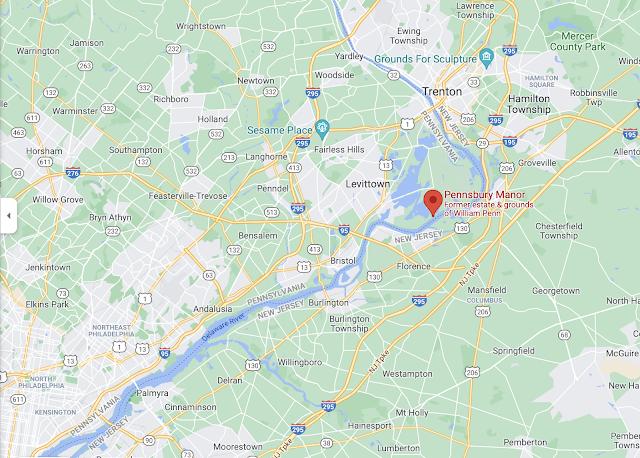
One thing of interest in the area that is Makefield is that William Penn had originally set this area aside for his children.  However,  the children did not settle there and it was sold off to others.  There is also information that William Penn had built a home in Bucks County on the Delaware River and was often seen traveling there via boat from Philadelphia.  


Something that I had never realized before is that William Penn was only on these shores for four years out of his life:


However, there is a major problem with this new theory.  I can not find a son named John among either man's children.  Both men die with only daughter's and son-in-laws named in their wills.  Andrew died in 

And William's will was proved in 1721

The above is taken from a collection found on Ancestry:

Pennsylvania, U.S., Wills and Probate Records, 1683-1993


However, it is clear that at least one of the men did indeed have a son.  We find William's daughter, Mary, marrying James Hawkins of Dublin MM in Philadelphia in 1705.  And in 1706 Andrew Ellliott asks for a certificate to take to Dublin MM as he intends to marry Hannah Mead.


And also in the Falls MM in 1704 William's daughter, Elizabeth is to marry  a weaver of Makefield Township named William Downey.

Apparently, Andrew who was the son of William died young as his widow is found marrying Samuel Combe in 1713.  


William Ellet's daughter, Hannah, married James Downey, yeoman, in 1712.


In 1702 Ann Ellett is to marry Lennett Shaweres no parents named:


And in 1707 Richard Bidgood brings a certificate from Dublin Township intending to marry Sarah Elliott


I decided to look up the Dublin MM next.  It was pretty much in the middle of no where north east of Philadelphia.  But in looking up this MM I found a huge article about the Irish Quakers that I didn't read carefully.  I will want to read this at some point:


I am winding yarn for my As You Wish shawl while I read books on-line.  I am reading: 

History of Bucks County, Pennsylvania : from the discovery of the Delaware to the present time

by William W.H. Davis.  It is available on Ancestry.  On page 18 the author tells that our Elliott family are among the first to arrive directly to Bucks from England:

This information starts at:
https://www.ancestry.com/imageviewer/collections/14300/images/dvm_LocHist001132-00020-0?ssrc=&backlabel=Return
and continues for several pages telling the order that people moved into the area on both the east and west banks for the Delaware river. While our Elliott line is not mentioned many other families are mentioned and could be families from which John Elliottt's wife, Sarah was from.

There is an excellent bibliography that I would like to explore at:

Saturday, February 12, 2022

Newton Friends Meeting in New Jersey

 Coming from England, William Cooper, settled at Pyne Point in 1680. He and other Quakers who had settled further south on Newton Creek (by the Walt Whitman Bridge) worshipped with Friends who had settled at Shackamaxon on the Pennsylvania side. With the arrival of William Penn, the Pennsylvania Quakers were gathered into meetings on their side and New Jersey Friends formerly formed the Newton Meeting in 1682. The first meetinghouse was built on Newton Creek, in what would now be West Collingswood, in 1684......

https://newtonmeetingcamden.org/about-us/history-of-the-newton-meeting/


Pyne Point is just above this outlined in Red across the river from Philadelphia.

A meeting for worship at Pine Point was established in 1681 by Burlington Monthly Meeting. In 1682, the meeting became part of a short-lived monthly meeting for Pine Point and Shackamaxon (Pa.) established by Philadelphia Monthly Meeting. It became part of Newton [Haddonfield] Monthly Meeting at its formation, possibly as early as 1682. A preparative meeting was established in 1717.


I went through the entire Vol II of Hinshaw and found only the mention of the Certificates for John and Sarah Elliott.  However, I did have a bit of interest in the last  meeting mentioned.  It is Falls Meeting in Bucks County.


There is an Elliott couple mentioned in the births for this meeting:

It is not impossible that this couple could have been parents of John Elliott.

And among the minutes and marriage records is the following:


I had to look up ltm in the abbreviations and it stands for is at liberty too marry.  Again it is not impossible that this Elliott group could be related to John Elliott.  
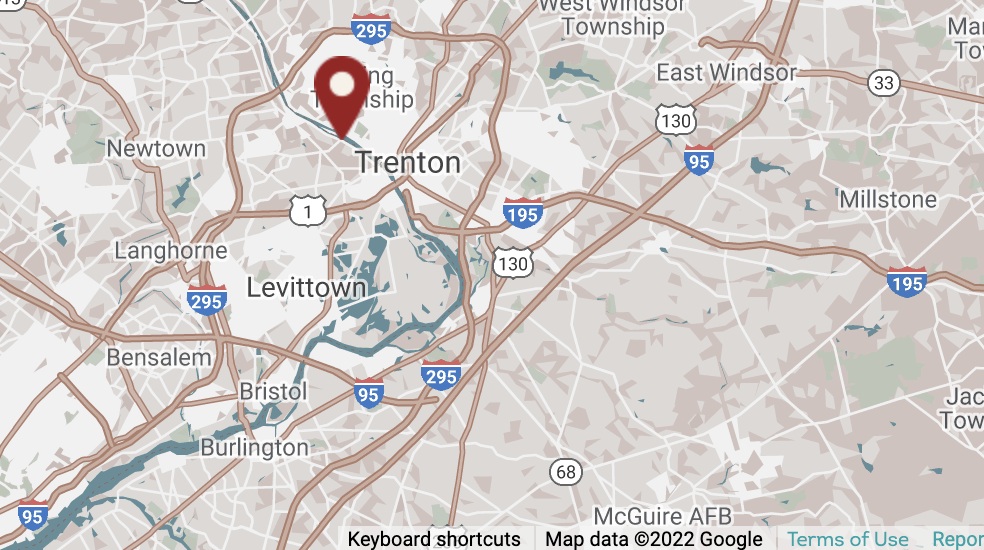
The below map shows Buck County and the blue marker is approximately where the Falls Meeting was located.


Remember that in the early days the members of Falls Meeting met in their homes for worship but went to Burlington for Monthly Meeting for business.  By the time the Elliott family was in the minutes, they had formed a monthly meeting of their own.  But My guess is that there was a bit of back and forth between the two communities.  Bucks County is outlined in red.


Now a bit of quick and dirty tree making via Ancestry.  Ann Elliott's father was Willam Elliott.  william was born in 1645 in Somerset, England.  He died in 1721 in Bucks County, PA.  One tree says that William's father was Andrew and his mother was Ann Holmes.


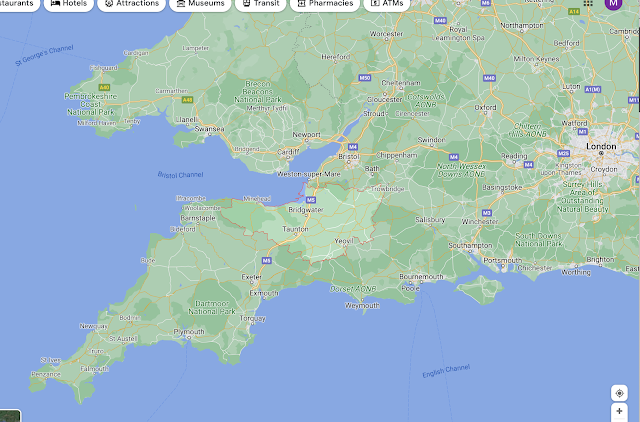
Somerset is outlined in red in above map.  It is just below Wales on the map and last county before the land runs out in the south west.


Among them was a marriage for William Elliott and Mary Bart in 1680.  This works very well for the children found in the trees that I have looked at.  There is a will for William Ellliot on this site.  There are no sons mentioned.  Only four daughters.  The William Elliott that is on this lady's tree is not the father of my John Elliott.  On this same site is a Quaker record for a William Ellot born in 1688 in Bucks County

Next I looked at Andrew Elliott who married Hannah Mead in 1706.


The above tree had information about the arrival of this couple on our shores in 1678.

Ok....slow down.  This is not the same Andrew who arrived on these shores in 1678.  I am going to start a new blog post about this Elliott family found in Bucks County as early as 1678.  Date of new blog is Feb 19, 2022.


The above tree has William Ellet married to Mary/Ann Holmes with son John Born in 1680.  And William's father, Andrew Ellet is the original immigrant and dies in Bucks County in 1684,

After spending much of the day looking at these families, I realize that almost everything that I have pertains to William Ellet who is the brother of Andrew Ellet who arrived on the ship Factor of Bristol around 1681 with wife Ann and two servants.  I can find nothing of Andrew Ellet.  He is not in the Quaker records nor can I find a will for him.  The Ancestry trees who include him call him father to William but have birth dates that indicate that Andrew was 8 when he fathered William.  This is both good and bad news.  No one seems to have found anything at all about Andrew's family.  Perhaps there is nothing to find?  But also perhaps he had a son named John who did join the Quakers when he married Sarah?

I found this about Newtown: